We started with a morning wandering through the still quiet streets of Madrid before we met our very informative guide for our food tour.
During the food tour not only did we taste delicious and iconic dishes, we also learned a lot about the city itself.
After the tour we thought it prudent to waddle around a bit to get some of all that deliciousness processed, since we had a great dinner planned.
We walked across the much busier city now to the quiet botanical gardens next to the Prado Art Museum.
On our way back to the hotel we noticed the sidewalks are getting more and more packed with people. Little did we know that it was part of the nearly a quarter of a million people waiting for one of the largest St. Patrick’s Day celebrations in Europe.
Our hotel, with balcony, overlooks the Gran Via which is the main parade route. Once upstairs we poured some wine and watched the parade from up high, like royalty.


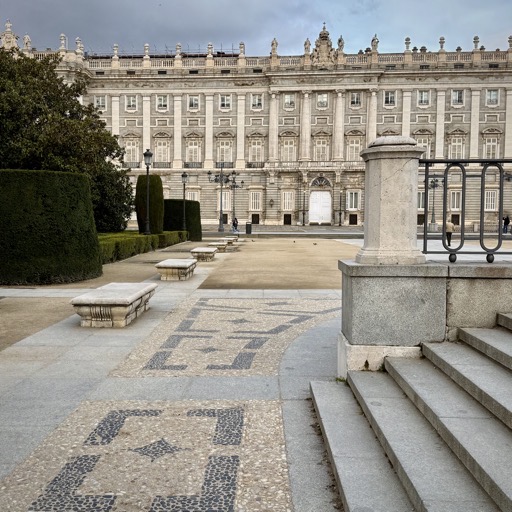
The Royal Palace of Madrid is the official residence of the Spanish royal family and is used primarily for state ceremonies. With over 135,000 m² and 3,418 rooms, the Royal Palace of Madrid is the largest royal palace in Europe and one of the largest in the world.

THE ORIGIN OF THE WORD MAJRIT
The ancient city of Majrit was founded on land under which many underground aquifers flowed, by a stream that ran along what is now Calle de Segovia, making this a privileged location. In fact, the word Majrit is a hybrid between the Arabic word, “Majra”, which means waterway of course, and the Romance suffix “it’s which indicates abundance; hence the meaning is a place of abundant waters”. Indeed, Majrit was traversed by numerous underground Water channels or conduits, known as qanats, which supplied the population with water and also irrigated the croplands.


The Plaza Mayor is the principal public square in the heart of Madrid, the capital of Spain and it was once the centre of Old Madrid.

The Mercato de San Miguel is a stunningly beautiful market in the heart of Madrid.
It now consists of mostly tapas stalls with unusual bites and little bar counters.


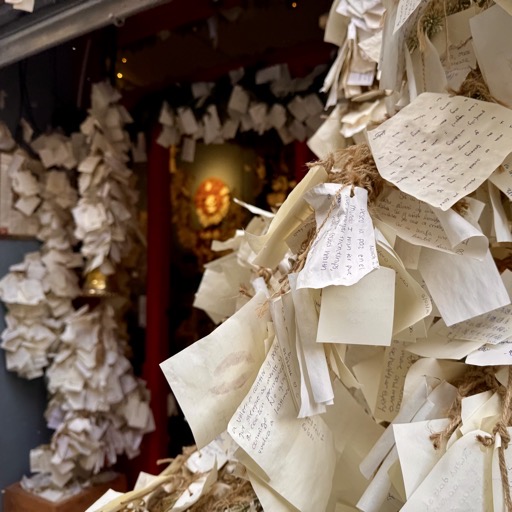
A store where people write their wishes and stick them to a wall. There were many thousands of notes.


Our first sample was Iberian ham, which comes in three qualities, diced tomatoes in oil for the bread, and a glass of Cava.

We got to try and cut the ham ourselves. It looks a lot easier than it is!

The oldest door in the city still dates from the time of the Moors.


Our drink was a local drink similar to sangria but with no fruit called Tindo de Verano.
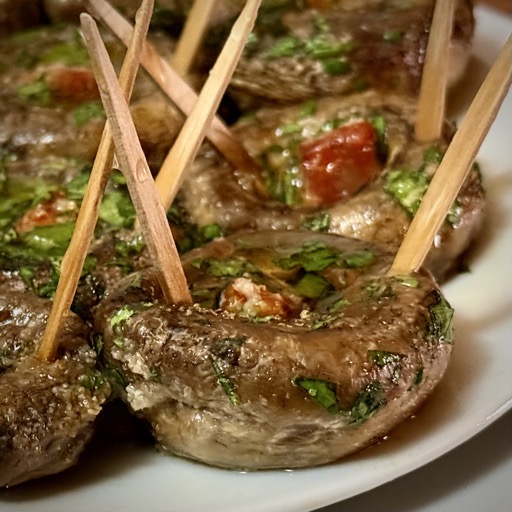
Fried mushrooms with garlic and chorizo.

Grilled padron peppers.

The oldest continuously operating restaurant in the world. They even had the certificate from Guiness that says that!

Next stop looks a little crazy.

The mass of people trying to order. The lines went around the block.

This is what all those people wanted. The most amazing calamari sandwich.

The location where the iconic dish Patas Bravas was invented.

La Casa de Abuelo is next on the list.

The famous garlic shrimp. We had a dry vermouth with lemon as our drink.


Time for something sweet to end the tour.

The entrance to the store has a view to a crypt. Very disconcerting.

Truffles and little pieces of chocolate called ‘Cat’s Tongue’

Drinking chocolate.

Stopped for a drink on the walk.


The Royal Botanical Garden (RJB) is a privileged historical space located in the heart of Madrid. It was inaugurated in its current location in 1774, during the reign of Charles III.
It is part of the Spanish National Research Council (CSIC), Ministry of Science and Innovation, and is recognized as an Artistic Garden and National Monument.


From February 13th to May 17th 2026, the work of Dutch artist and activist Claudy Jongstra and renowned Spanish fashion designer Marcos Luengo, alongside digital artist Ivan Puñal will be presented in collaboration with Villa del Arte Galleries at the emblematic Real Jardín Botánico de Madrid.
The exhibition, Día y Noche. Ritmos del alma connects the art of Luengo and Jongstra with the world of plants in the botanical garden and will follow the rhythm of day and night. The cycle of life is all around us omnipresent in different shapes and forms; we can experience it in the ebb and flow of the seasons, or the ever-returning night and day. Plants, like all life on earth, are affected and influenced by this cycle of dark and light, and their sap flows from roots to crown following this rhythm. In a world that increasingly values efficiency and economic gain, there is diminishing space and appreciation for the time, knowledge and intuition it takes to follow and work with this rhythm.
For as long as we can remember plants have been used by mankind to produce the most beautiful colours, from the lightest and brightest yellows, greens and pinks to the deepest, darkest blues and blacks. In her work, Jongstra celebrates the whole colourful spectrum of these plants and their dyes, many of which can be found in the Real Jardín Botánico. But her art is not just a celebration of colour, it also addresses urgent themes such as ecology, the loss of biodiversity, and creates awareness about how we can revitalize rural communities and preserve natural heritage, whilst questioning issues such as waste wool and the impact on the environment.


Watching the St. Patricks day parade from our balcony, once we were able to elbow our way through the quarter of a million people attending to make it to our hotel.

