France

But Wait… There’s More Adventure!

Our last morning in Paris before we leave back to our daily grind.

We re-packed all the bags and since our plane only leaves late in the afternoon, decided to stroll Paris early in the morning, and then have a brunch with a good friend of ours to celebrate her birthday. It was a most delightful morning watching the city slowly wake up.

After breakfast we had a glass of wine at a small Parisienne Brasserie and decided to leave for the airport a little early since we still need to get through that process and like to relax before we board.

Little did we know… ANOTHER ADVENTURE AWAITED US!

Normally, the easiest and fastest way to the airport is by train. Very simple, you get on the train in the center of Paris, and a short time later that train drops you inside the airport which is about 20 miles away.

Not today.

The train traveled one stop only, to the main train station in Paris and there the line ended. They moved us to another train that also only traveled one stop and unloaded us all.

From here they are going to bus everybody to the airport.

Imagine, if you will, hundreds of very confused people with giant suitcases, having to walk a block or two and then getting crammed into a bus. Do not forget about the tension and stress of all these people that left for the airport at the last minute to make their flights, not anticipating all this extra time to load a bus, deal with traffic on the roads, and then unload a bus. The atmosphere was electric, not in a good way.

We left early enough so we made it through everything, relaxed in the lounge with a drink, and then boarded our plane in time.
It also helped having only carry-on luggage.

Until next time, Europe!

Early morning Paris in spring.
The Brasserie Cat

Looks like a good place to have breakfast?
It was!

Church of Saint-Eustache

In the heart of Paris stands the Gothic silhouette of the Church of Saint-Eustache, It is the successor to the first parish church built in the thirteenth century, which was altered and then completely rebuilt between 1532 and 1637. From this pivotal period in the history of religious architecture, the building retains its Gothic vaults with intersecting ribs, forming a solid framework reinforced externally by buttresses. The height is impressive, reaching 33.50m under the vaults.

The originality of the building lies in its Renaissance-style decorative language: Corinthian capitals, foliage, and masks are elegantly juxtaposed with Gothic architecture. The western facade underwent rebuilding in the classical style from 1754 until the French Revolution halted construction, which left the south tower unfinished. Numerous painted and sculpted masterpieces, ranging from the fourteenth to the twenty-first century, enrich the building of the popular, lively shopping district of Les Halles.

There was a small service that started when we entered. The acoustics in that space was beautiful.

Reflections of old Paris architecture on new Paris architecture.
The river Seine
Another Hector Guimard designed Art Nouveau metro stations.

Goodbye Europe, it is not Au Revoir, it is definitely À bientôt.
(Or the same sentiment in all four languages we had to learn to speak over the last three weeks.)

But Wait… There’s More Adventure! Read More »

A Last Surprise

We traveled to Paris on the high-speed TGV from Barcelona and best of all, there were dogs on the train.

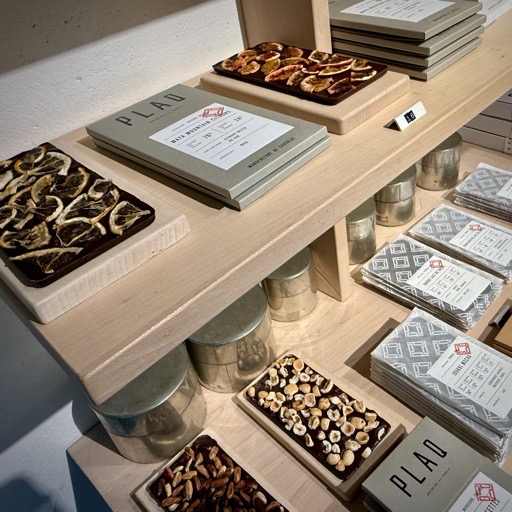
After checking in to our hotel, we walked around for a while, bought some fancy chocolate and had a glass of wine before dinner.

Dinner was the quintessential cherry-on-top of a great culinary birthday journey.

We were able to get last minute reservations on a front window table in the restaurant in the Eiffel Tower.

Neither one of us has ever been up the tower before, and to go up and then have an amazing dinner at the best table in the restaurant was very special. The view was spectacular.

After dinner we walked up to the Trocadero to see the hourly flickering of the tower.

It was a late and fantastic night.

High speed train through the French countryside.

Welcome to Paris.

Fun view from the hotel room. The courtyard was quiet.

Our favorite street.

Last bougie chocolate buy to be able to pack it all.

Sneakies before dinner.

She is such a beauty at night.

Up we go!

Our restaurant for tonight.

The view from our window table.

The ‘second floor’ was surpisingly empty.

The last time we were in Paris this was covered in volleyball fields. (See the 2024 Some Summer Games journal)

Best view of the tower with perfect timing.

The way in to the Metro is so charming and French.

The way out, not so much.

A Last Surprise Read More »

The Perfect Sète-ing

Our tour today started with a very informative stroll through the town of Sète.

It was settled more than two thousand years ago by the Greeks because of the hill surrounded by water that was easy to defend. The name Sète is derived from an old Roman word that means ‘whale’ since the Mont St. Claire hill looked like a whale to the sailors.

This is also the end point of the canal that was built by the french king to connect the North sea to the Mediterranean. There are now many canals so the town is also known as the ‘Venice of the Languedoc’ They also have a yearly ‘canal jousting’ competition.

The town sits next to the Ètand de Thau, a saltwater lagoon, where there are more than two thousand oyster beds. One of the main industries in town.

The other is of course wine, since it is the closest port to the Languedoc wine region.

After our city tour we were off to an oyster farm to get a closer look. Included was also an oyster tasting with a local wine which paired very well.

We watched the worker as she cemented baby oysters to a string. This will then hang in the lagoon for about three years before they get harvested.

Since there is no tide here, they never get out of the water and thus do not grow the strong muscle to close up, which makes them a lot softer.

The oyster place was dark and industrial and we were getting worried about where we were going to do the tasting. Our guide took us to a set of stairs and like a true speakeasy, it opened up into a fantastic seafood restaurant.

We gorged ourselves with the freshest seafood (and oysters, of course) with the wines made with the local Picpoul grape.

After lunch we went to a local wine farm to taste the other local industry, wine.

We had a few extra minutes so our guide was able to stop for us to do another tasting and buy some Picpoul wine.

A great day!

A very foggy morning.

Once an island, described by the poet Paul Valery as the ‘singular isle”, this port town owes its existence to Louis XIV and Paul Riquet’s major canal, built to link the Atlantic and the Mediterranean – now known as the Canal du Midi – which led to the creation of this new seaport in July 1666. Here there are neither city walls nor palace. The architectural heritage of Sète, which was spelt Cette until January 1928, gradually grew up around the development of its port. 

Canals throughout town.

It was market day!

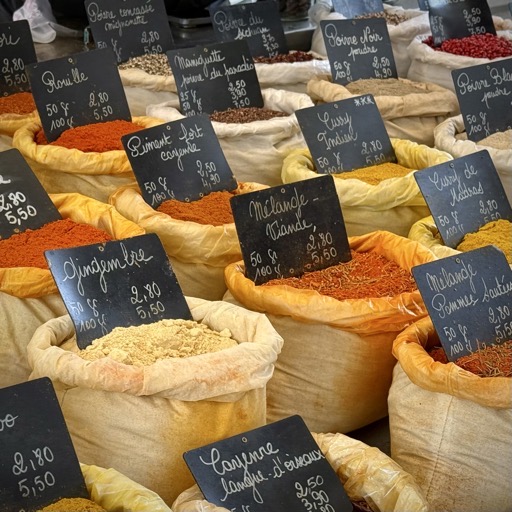
Spices.

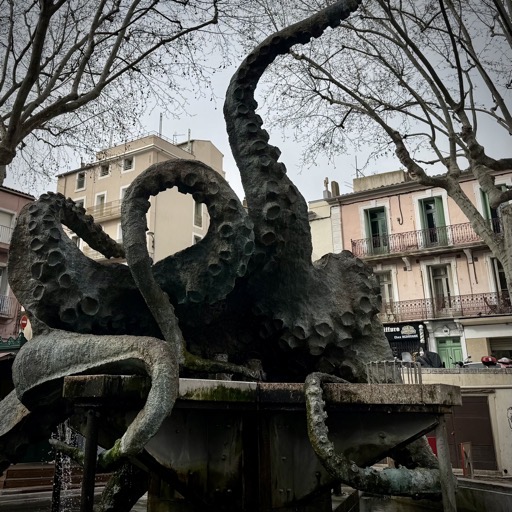
There is a local delicacy, an octopus pie, called ‘Tielle’

The Royal Canal was built in 1666 by King Louis XIV

They were hand building a ship to get ready for a big boat festival that happens once every two years.

The view of Sète from on top of Mont St. Claire.

Entering the are where we will learn about oyster farming in the lagoon.

First she lays out the baby oysters in groups of two and then strings a nylon rope over them.

After a blob of cement, a third oyster gets placed on top to hold the rope in place

These will now move to the oyster ‘bed’ in the lagoon to hang there for about three years.

The upstairs speakeasy restaurant.

Yum.

There are two thousand of these oyster beds in the lagoon.

There are about five hundred ‘farmers’ sharing the oyster beds.

Domaine Saint-Andre was created in 1785.

Off to explore the cellars.

Au revoir, Sète.

The Perfect Sète-ing Read More »

Another Day, Another Dinner

Tonight we did the other restaurant, Manfredi’s, that specializes in Italian cuisine.

One word: Yum!

Classic Italian interior.

Insalata Caprese
Buffalo mozzarella, vine ripened tomatoes, basil, extra virgin olive oil

Risotto ai Funghi Porcini
Porcini mushroom risotto, Parmigiano Reggiano

Spaghetti all’Arrabbiata
Fresh spaghetti with garlic, parsley & spicy tomato sauce

Bistecca alla Fiorentina
Thick cut rib eye coated in garlic oil and rubbed with porcini mushroom powder, kosher salt, brown sugar & red chili flakes

Pescato del Giorno
Fish of the day as described by your waiter – Sea Bream

Tiramisu Classico
Mascarpone cream, coffee, savoiardi

Panna Cotta alla Nutella
Nutella panna cotta; salt crumble

Beginning to realize it is futile to try and walk it off after such a great meal.

Another Day, Another Dinner Read More »

Wine Not?

Todays exploration took us to the Bondol wine region.

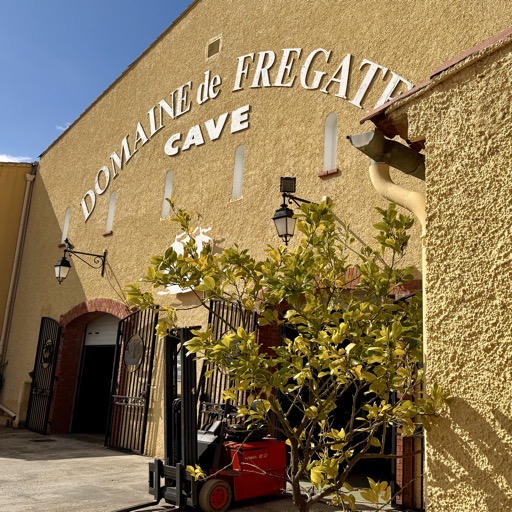
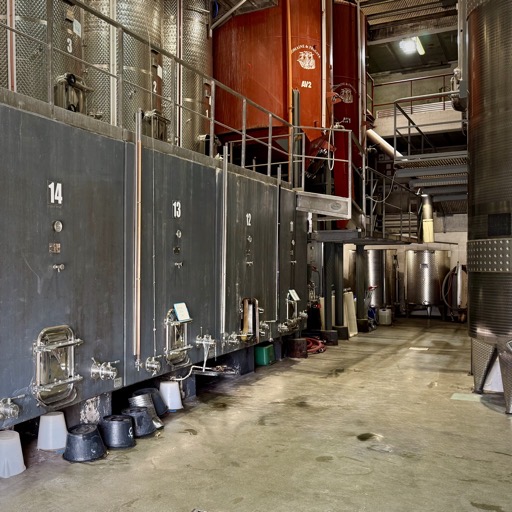
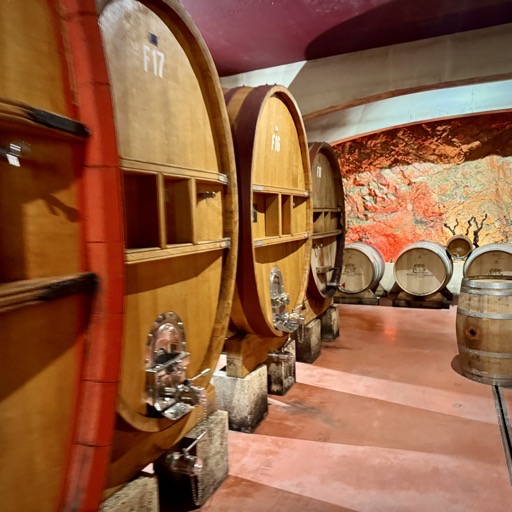
The first stop was at the Domaine de Fregate wine cellars to learn more about the wines here, and have a tasting, of course.

They have been making wines here for about 25 centuries and this is one of the oldest AOC’s (Controlled Area of Origin) in France.

It was fascinating to learn how strict they are about the AOC certification. It even specifies how many vines you can have on a root (2), and how many bunches of grapes you can have per vine. (Max 6)

From there we went to the tiny little medieval village of Le Castellet perched on a cliff. The village itself was so picturesque and the views of the surrounding countryside breathtaking.

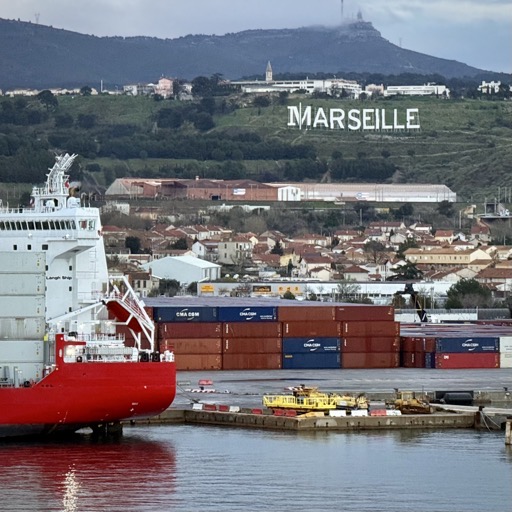
Good morning Marseille!

Winery on top of the slope.

The different varietals from the Bondol area.

The city gate.

The location that was used in a French movie by Pagnol from 1932, called La Femme du Boulanger.

Were the front arch curves into the ceiling, you can see the (now closed) window from where the ruler of the village would attend service since they could not mix with the commoners.

The views from up here are breathtaking.

This restaurant uses old gondola carriages as little eating rooms.

From our ship you can see the island where the Count of Monte Christo was imprisoned. Alexander Dumas was living in Marseille for part of the time while he was working on the story.

Wine Not? Read More »

A Very Tasty Table

Dinner tonight was a Korean tasting menu with wine pairing at the Chef’s Table.

It was a culinary feast that is difficult to describe in mere words, so let the pictures tell the story.

The Specialty Restaurant for tonight’s dinner.

Since South Korea is located at the southern end of the Korean peninsula, where cold currents and warm currents meet, it produces varied seasonal foods. Korean food is mainly barbecue, soup, rice and vegetable dishes. Anyone who has tried to make kimchi, a popular side dish consisting of spicy cabbage, would be impressed by this quintessence of Korean food culture. Korean barbecue is as famous as Korean kimchi and is loved by everyone.

In Korea, there is a saying that “food is one of the five blessings.” Korean food is characterized by five colors and five flavors. The five colors are red, white, black, green, and yellow, and are based on the Five Elements Theory. The colors are bright and beautiful, which are said to stimulate appetite.

The five flavors are sweet, sour, bitter, spicy, and salty. The five flavors mainly rely on rich seasonings and the seasonings are referred to as “Ta (yaonian)” in Chinese characters in Korea, which means “dishes with various seasonings are as beneficial to health as tonics.” One such indispensable ingredient is chili sauce. Korean food generally looks red and spicy, but there is actually a sweetness in Korean chili sauce, which makes it less spicy.

Tonight’s culinary voyage will allow you to taste refined Korean cuisine.

AMUSE BOUCHE

EEL CHAWANMUSHI
smoked sweet soy glazed eel, octopus, steamed egg custard

Commonly called “Körai chawan,” a bowl used for preparing and drinking tea, this small bowl of steamed eggs focuses on a smooth and delicate texture. The “umami” taste given by bonito flakes and kombu broth is light, but sweet. The combination of grilled seafood enhances the flavor of this home-cooked dish.

APPETIZER

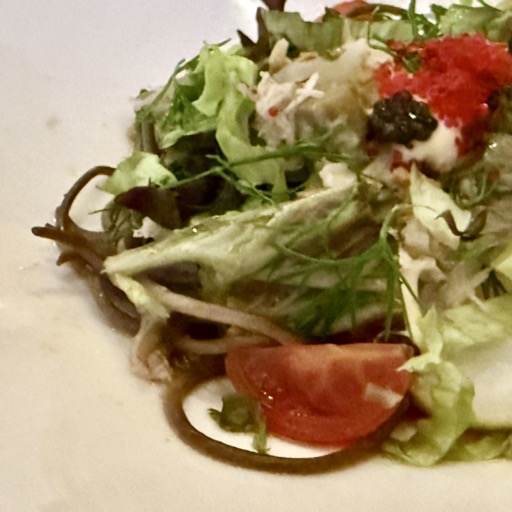
HEALTHY “OCEAN PARTY”
crab meat, scallop, tobiko, avocado, cucumber, mango, soba noodle; sesame mayo dressing

The ingredients of this salad are diverse, especially in the use of seafood. The sauce is a mix of Western and Asian flavors. This sesame-flavored seafood salad is sweet, fragrant and crisp in every bite.

SOUP

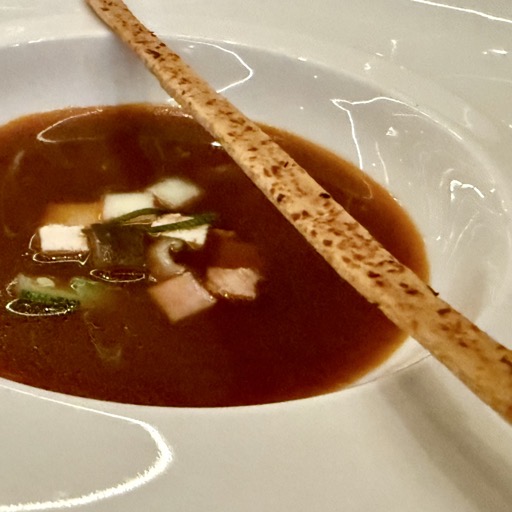
KOREAN SOUP POT
smooth tofu, mushrooms, zucchini, pork belly, Korean bean paste broth

Soup has been loved by Koreans since the Joseon Dynasty. Soybean paste, a common soup ingredient, is very easy to mix with other flavors. When cooked with meat, tofu and vegetables, it is delicious and healthy.

MAIN COURSE

THE MORE BBQ, THE MORE PROSPEROUS 
barbecued Korean marinated beef short ribs, pickled onion, sweet potatoes, green lettuce, chill pepper, cucumber; Korean BBQ sauce; kimchi fried rice 

Barbecue with kimchi is classic Korean cuisine.

Korean barbecue was introduced to ancient Korea from China. It originated from a method in Northeast China where the meat was first marinated and then grilled in order to preserve it for a longer period of time. This marinated, premium ribeye meat is served wrapped in lettuce, or with a bite of kimchi to add an extra layer of flavor.

DESSERT

A TOUCH OF FRESHNESS 
matcha cheesecake, yuzu ice cream

This dessert combines matcha-an ingredient that has been used in Korea since the 7th century-with the baking technique of Western food, presenting a light and soft cheesecake. The slight bitterness of matcha and the refreshing taste of yuzu ice cream relieve the heaviness of the cheese, reflecting the harmony in Korean cuisine.

Trying to walk off some of that feast.

A Very Tasty Table Read More »

We were Azur-ed

We docked on the famous Cote d’Azur near the small town of Villefrance-sur-Mer.

We tendered from the ship to the port and then went off to explore the principality of Monaco.

This whole area is so beautiful with charming coves and bays all along the coast. Of course, this area has been popular with the rich and famous for hundreds of years, so there is a cascade of mansions and palaces along the mountainsides that makes for a very scenic trip.

Good morning!

Leaving the ship by tender.

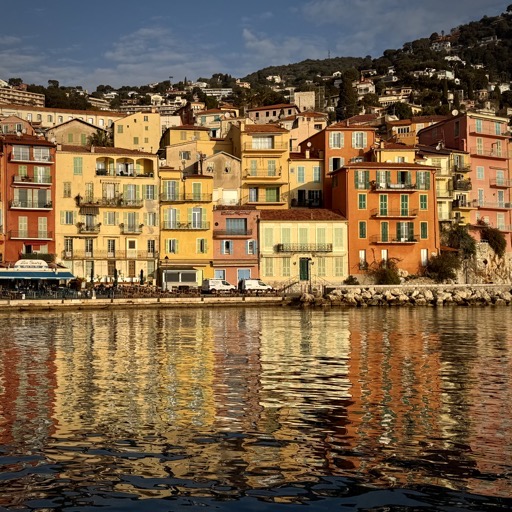
Villefrance-sur-Mer in the morning sun.

Our first stop in Monaco, the Musée Oceanographique de Monaco which was inaugurated in 1910 by Prince Albert 1. The famous deep see explorer, Jacques-Yves Cousteau, was director of the museum for more than 30 years.

The original deep sea submarine of Jacques-Yves Cousteau is on display outside the museum.

The decorations on the building are all sea creatures.

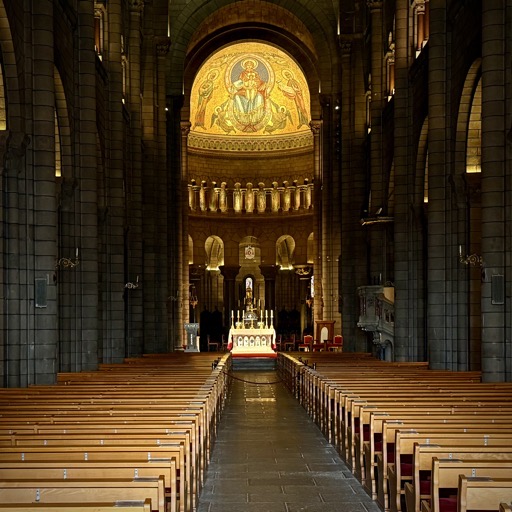
Cathedral of Our Lady Immaculate, also know as the Cathedral of Monaco, is a Romanesque-Byzantine Catholic church that contains the remains of many members of Monaco’s ruling family.

Grace Kelly’s final resting place.

The palace of the Prince of Monaco.

The Prince was in residence so there was a lot of other security as well as the guards.

A view of the racetrack of Monaco which is now being prepared for a visit from the pope. The side of the hill behind is the district of Monte Carlo.

Walking the streets in Monaco.

Nice, capital of the Alpes-Maritimes department on the French Riviera, sits on the pebbly shores of the Baie des Anges. Founded by the Greeks and later a retreat for 19th-century European elite, the city has also long attracted artists. Former resident Henri Matisse is honored with a career-spanning collection of paintings at Musée Matisse. Musée Marc Chagall features some of its namesake’s major religious works

Walking around Villefrance-sur-Mer.

The Rue Obscure (Dark Street) in Villefranche-sur-Mer is a 430-foot long 13th-century covered passageway in the Old Town. Originally a defensive, open-air walkway for soldiers, it was later covered by houses, creating a dark, tunnel-like alleyway..

A copy of the painting by Jean Cocteau at the entrance to the Rue Obscure.

Waving goodbye as we head back to the ship.

A final vista as the soft rain comes in.

We were Azur-ed Read More »

Singing the Blues

We have read about this restaurant, Le Train Bleu, a few years ago and have simply not been able to get here.

With our hotel being on the station, we could not let this slip by.

Since we already had dinner plans, we opted for afternoon cocktails.

Maybe next time we will eat here…

The restaurant
Every inch is stunning
View to the bar
The bar
View from the bar
Being judged for day drinking?

Singing the Blues Read More »

Are we there yet?

After nearly two years of planning and working on it, we are finally here.
Today, in exactly one week, we leave for Pieter’s birthday trip. Not just any birthday, a big one.

He turns 60!

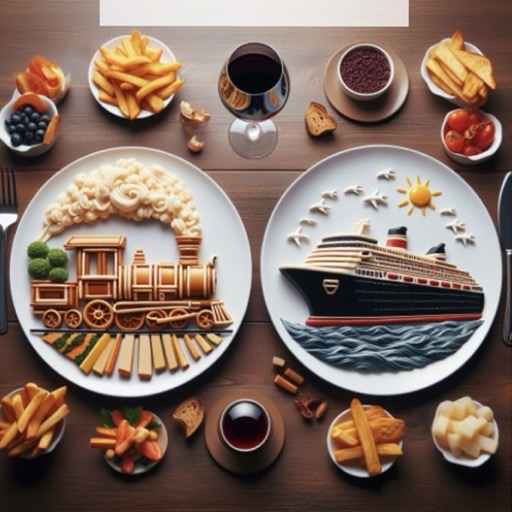
To celebrate this big number, he wanted to do what he does best: Eat. Drink. Travel. From there the idea of a culinary adventure through Europe took form.

Since it is a big birthday, we invited friends and friends-of-friends to join us for part of the journey. There will be a big group of people with us on the cruise to celebrate on the actual day.

A quick overview of our itinerary:

  • Paris
  • Milan
  • Venice
  • Florence
  • Rome
  • Cruise
    • Pisa
    • Livorno
    • Villefranche-sur-Mer (Monaco)
    • Marseille
    • Sète
    • Barcelona
  • Madrid
  • Valencia
  • Barcelona
  • Paris

In case you are wondering… in every city (except for one or two on the cruise) we have an organized food tour.

There is also twenty (already planned and booked) train journeys in there!

As always, expect some stories about adventures, praising delicious “nibbly-bits and drinky-poos” and lots of photos as we try our best to keep up this journal.

Three weeks in Europe in winter, with only carry-ons? Challenge accepted!

The gówniaki is not impressed, and/or depressed.

Are we there yet? Read More »

Scroll to Top