Yo Wanna Pisa Mi?

The ‘Miracle Square’ in Pisa was definitely worth experiencing.

The idea was the four steps of religious life: baptism, church, cemetery (burial) and the ‘stairway to heaven’.

However, since they are all so close to the water there is nothing really to support the foundations. The tower, the most concentrated mass on the smallest space, slanted first but all the other buildings are also all a little askew.

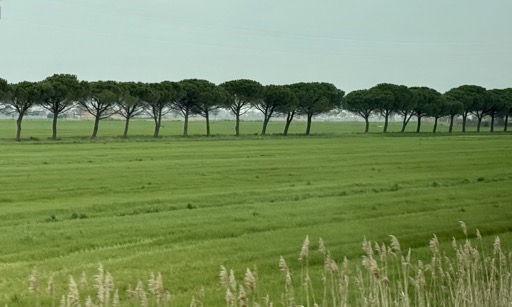
Good morning, Livorno!

Umbrella Pines are everywhere.

Walking into Pisa

Our first view through the city gate.

The Baptistery stands as one of the cardinal points of the idea of the square that was coming of age in Pisa in the XIl century; what was taking shape was a space that gave priority to the front view of the façade of the Cathedral, the axial character of which was now set off by such a meaningful building as the Baptistery, built along the same lines.

The reason for building such a fascinating as well as mysterious building was certainly the will to provide the Cathedral with a worthy addition: a Baptistery that, because of its location, size, materials and style, would be in tune with the impressive and typical building that existed before it. These might be the terms in which the holders of the local ecclesiastic and civil powers, who had expressly set up a board, the “Opera ecclesiae Sancti lohannis Baptiste”, had expressed their wishes to architect Deotisalvi, whose figure remains in the dark and can hardly be reconstructed as there are no written sources about him. The inscription “Deotisalvi magister huius operis”, “Deotisalvi is the author of this work”, found on a pillar of the Baptistery, claims authorship of the building.

According to the same source, in 1163 it was ordered that on the first day of the month every family of Pisa should pay one denaro to continue the building of the monument. This is evidence of the city’s contribution to the monument, as is also proven by the fact that the installation of the columns was organised and contributed to by the city neighbourhoods.

It is the largest Baptistery in Italy: 107.24 metres in circumference, while the wall at the bottom is two metres 63 cm wide, its height 54 metres 86 centimetres. The dome is covered in red tiles on the west side and in lead slabs on the east side.

The big cylinder is surrounded, like the Cathedral, by arcades on pillars and, like the Cathedral, it is made of white marble edged with grey. Inside, eight monolithic columns compete for height with the Cathedral, alternating with four pillars and outlining a central area that accommodates the octagonal baptismal font by Guido da Como (1246), with Nicola Pisano’s pulpit next to it (1260). A women’s gallery covered by a ringed vault looks out onto the central area with a series of large round arches. The covering is composed of a double dome, the inner one shaped like a dodecagonal truncated pyramid, the outer one in the shape of a hemispherical vault, with a smaller dome on top. It is precisely the unique architectural design of the covering that gives the Baptistery of Pisa exceptional acoustics. It can be heard every 30 minutes when the security guards perform a series of vocal intonations.

The cathedral stands, secluded everywhere, in the vast, silent expanse of greenery enclosed by the crenellated walls of the Medieval town, that in such seclusion erected admirable monuments of its past life. In that isolation, the snow-white cathedral, visible from everywhere, looks as if it had been shaped and completed by a vast, consistent creative gesture”. (Pietro Toesca)

The importance attached by the people of Pisa to the building of the Cathedral can be read in the epigraphs that are still embedded on the façade: the tombstone of bishop Guido, who began building it, funded by the fabulous loot that the people of Pisa took from the pillage of Palermo in 1063, the tombstone of Buschetto, the first ingenious architect, in which the building is called “a temple of snow-white marble”, and the one that tells of the anti-Saracen battles of Reggio, Sardinia and Bona, in Africa.Founded in 1064 and consecrated with great pomp on September 26th 1118, the Cathedral was built in two stages, one by architect Buscheto, who created the original layout with the basilican body with four aisles and one nave, a transept with one nave and two aisles, and the dome on the cross vault, and one by Rainaldo, who extended the building and the façade.

The building was not finally completed until the last quar ter of the XII century, when Bonanno’s bronze leaves were placed on the central door. This famous masterpiece was lost, along with other important works of art, in the devastating fire of 1595.

Inside, the nave is edged by two rows of monolithic columns made of granite from the Isle of Elba, flanked by four aisles separated by smaller colonnades with large women’s galleries on top, covered by cross vaults and looking out onto the nave through some double-lancet and four-lancet windows.

The nave is covered by a wooden coffered ceiling that in the XVII century replaced the original exposed trusses.

Of the rich and sumptuous decoration prior to the fire, remain the mosaics on the apsidal conch – where Cimabue made the figure of Saint John the Evangelist (1302 ca.) – the pulpit (1302-1310) by Giovanni Pisano, the dismembered sepulchral monument to Emperor Henry VII (1315), which used to be at the centre of the apse, and important examples of painting and wooden inlay of the Renaissance period.

The Cemetery is the last monument on Piazza del Duomo, its long marble wall flanking the northern boundary and completing its shape. It was founded in 1277 to accommodate the Roman sarcophagi that until then were scattered all around the Cathedral and were reused to bury local noblemen. This is how one of the oldest Christian Medieval architectures for the devotion of the dead came into being.

During the fourteenth century, as the construction took shape, the inner walls were embellished by wonderful frescoes about Life and Death, created by the two great artists of the time, Francesco Traini and Bonamico Buffalmacco, who seem to stage the sermons declaimed in town by the Dominican Cavalca or the frightening views of Dante’s Comedy; reference to it is most evident in the Triumph of Death and in the Last Judgement painted by Buffalmacco, who is also known as the character of some of Boccaccio’s stories. The cycle of frescoes goes on well into the fourteenth century with the Stories of Pisan Saints by Andrea Bonaiuti, Antonio Veneziano and Spinello Aretino and the Stories of the Ancient Testament, started by Taddeo Gaddi and Piero di Puccio and finished in the mid-15th century by the Florentine Benozzo Gozzoli, along the northern wall.

Since the sixteenth century, the Cemetery has sheltered the sepulchres of the most prestigious lecturers of the local University and the members of the Medici family, who ruled over the city at that time and are also hinted at by the characters of the Biblical scenes frescoed on the shorter walls.

The monument was to become the Pantheon of local mem-ories: not only of the local people or families but also of the glorious classical and Medieval past of the city. The building began to be used as a museum, its walls engraved with Roman epigraphs and the sarcophagi relocated to the corridors, acting now as valuables documents of history and art.

The use of the building as a museum established itself in the early nineteenth century when the Cemetery became one of Europe’s first public museums. In the years in which Napoleon decreed that many works of art should be taken away from the churches and taken to France, Carlo Lasinio, appointed Curator of the Cemetery by Maria Luisa, Queen of Etruria, collected amidst its frescoed walls the sculptures and paintings that were in the suppressed churches and convents of the city. Other works came from the Cathedral and the Baptistery, along with remains from the local archaeological sites and the antiques markets. In the meantime, commemorative and funerary monuments dedicated to the city notables continued to be built in the corridors that were renamed galleries.

Apart from its extremely famous inclination that really seems to defy the laws of statics, the Tower of the Cathedral is a very unusual building and one of a kind, because of the high historical and artistic value of its forms and because of its peculiar location, within that vast and equally unique area that is the Piazza dei Miracoli. The building is located far from the Cathedral, between the apsidal area and the southeastern section of the transept of the Cathedral. This is an unusual location – usually, a tower would be erected near the façade or along one side of the church – although this is not the only case, as it can be found in other complexes in town and in other Italian buildings. The current building, the result of a time-consuming construction work that was restored several times over the centuries, mostly to reduce the risk that it might collapse as a consequence of its remarkable inclination, is composed of a cylindrical stone body surrounded by open galleries with arcades and pillars resting on a bottom shaft, with the belfry on top. The central body is composed of a hollow cylinder with an outer facing of shaped pillars in white and grey San Giuliano limestone, an interior facing, also made of textured verrucana stone, and a ring-shaped stone area in between. This stone area accommodates a winding staircase with 293 steps leading up to the sixth open gallery, where the inner shaft is closed by a vault with a central hole to let light in, providing access to the belfry on top and, in the lower mezzanine floors, to the open galleries. The six open galleries resting on the bottom shafts, with this one and the belfry, divide the tower into eight segments that are called orders. The lower one is enriched by a round of blind arcades placed on half columns that include, under the arcade, a diamond-shaped compass inlaid with polychrome marble, with a raised rosette in the middle. The solid walls interrupted by the openings of some narrow single-lancet windows and, westwards, by the only entrance door: a rectangular area framed by a lintel. Above the lintel, a crescent-shaped arch with an inlaid archivolt rests on two capitals as a continuation of the jambs, forming a shrine containing the bust of a 14th-century Virgin with Child. On the sides of the door, some friezes decorated with animals and monstrous figures and the unusual figures of some ships (the Port of Pisa?) frame the commemorative epigraph of the foundation of the building. 

Yo Wanna Pisa Mi? Read More »

Rub-a-Dub-Tub Tour

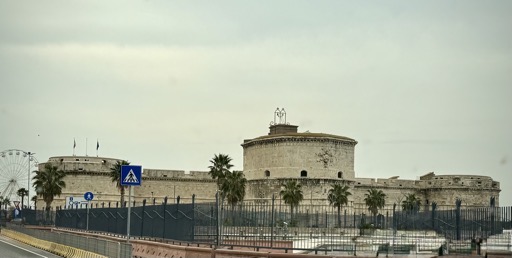
After saying arrivederci Roma, we headed out to the port city of Civitavecchia where our cruise ship was waiting for us.

We boarded early and had time to explore the ship while it was still unpopulated.

The ship launched last year (2025) and the design is so different from cruise ships we are used to. So calm and relaxing.

NOT a photo of the port and our cruise ship, but rather a painting from the Vatican of what it looked like.

Another Micelangelo designed fort.

Our first view of the Vesta. She is only a few months old!

The main lobby.

The main dining room is very interesting by having lots of intimate spaces for dinner, and not one giant room.

The ‘Living Room’

The only way you can tell that this is the Italian Specialty restaurant is by the light fixtures.

The Jazz bar

The theatre.

The solarium named ‘Winter Garden’

The pool with a retractable roof.

Explorer bar is at the back of the ship.

Showtime!

Rub-a-Dub-Tub Tour Read More »

Have Driver? Go Golfing!

This afternoon we did a golf cart tour of the highlights of Rome.

What a blast!

We immediately convinced the tour guide we are going to need wine, and he delivered.

Driving through the most insane traffic in an open golf cart trying not to spill your wine is an exhilarating experience.

Villa Borghese is a landscape garden in Rome, containing a number of buildings, museums and attractions. It is the third-largest public park in Rome (80 hectares or 197.7 acres), after the ones of the Villa Doria Pamphili and Villa Ada. The gardens were developed for the Villa Borghese Pinciana (“Borghese villa on the Pincian Hill”), built by the architect Flaminio Ponzio, developing sketches by Scipione Borghese, who used it as a villa suburbana, or party villa, at the edge of Rome, and to house his art collection. The gardens as they are now were remade in the late 19th century.

The Spanish Steps in Rome are a famous 18th-century Baroque staircase connecting Piazza di Spagna to the Trinità dei Monti church. Built between 1723 and 1725 by Francesco de Sanctis, this 135-step, multi-level masterpiece features dramatic, winding curves, making it a popular, albeit crowded, meeting spot and cultural landmark.

On December 8th, the Feast of the Immaculate Conception, the Pope visits the Column of the Immaculate Conception in Rome’s Piazza Mignanelli near the Spanish Steps to pray and lay a wreath of flowers at the base of the statue of the Virgin Mary, a tradition in place since 1958.

Trevi Fountain

A late afternoon view of the Roman Forum.

Stolpersteine (“stumbling stones”) are 10×10 cm concrete cubes topped with brass plates, installed by artist Gunter Demnig since 1995 to commemorate victims of Nazi persecution. Placed in pavements before victims’ last chosen residences across Europe, they bear names, birth dates, and fates (deportation/death). 

Key facts about Stolpersteine:

  • Purpose: To restore names and dignity to victims of the Holocaust, including Jewish people, Roma, Sinti, political prisoners, homosexuals, and Jehovah’s Witnesses.
  • Concept: The name refers to “stumbling” mentally over the fate of the individuals rather than literally.
  • Location: Over 100,000 stones are installed in more than 1,100 cities across 17–22 European countries, making it a widespread, decentralized memorial.
  • Details: Each stone is hand-crafted, listing the name, year of birth, and, if known, the date of deportation and death.
  • Installation: Initiated by community research or family members, the stones are placed at the last known, voluntarily chosen residence.
  • Maintenance: Neighbors and residents often care for the stones, polishing them to maintain their shine as a sign of respect.
A nice view of the Colosseum.

Good night, Roma. Until next time…

Have Driver? Go Golfing! Read More »

The Smallest Country of Hoarding

Today was an early morning private tour of the Vatican Museums, the Sistine Chapel and St. Peter’s Basilica.

We saw only ‘highlights’ on our three hour tour. It is massive and overwhelming and the art inside is rare and beautiful. And there is so much!

They were doing restoration of the Last Judgement wall in the Sistine Chapel but the famous ceiling was there in all its splendor.

St. Peter’s Basilica is by far the largest church we have ever been in. It is so much bigger than anything we have ever seen in a photo. To walk into that space makes you feel small, and exalted at the same time.

The original entrance of the Varican Museums had a statue of Michelangelo and Rafael above the door.

The new entrance looks like an airport.

It is the second busiest museum in the world with roughly 20,000 visitors per day. Early morning is the best time to be able to see anything.

The Pope’s gardens.

This group, found on the Esquiline in Rome in 1506, was immediately identified as the Laocoön described by Pliny and created by the sculptors Agesandros, Athanodoros and Polydoros of Rhodes. The group depicts a famous scene from the mythical Trojan War. Laocoön, a priest of the god Apollo, was opposed to the wooden horse being drawn into Troy, but Athena and Poseidon, who favoured the Greeks, sent two monstrous serpents up from the sea to strangle Laocoön and his two sons to death in their coils. In a Roman interpretation of the story, the death of these innocents was essential since the escape of Aeneas was crucial to the founding of Rome itself. Clearly such an important sculpture did not escape the notice of Julius I (1503-1513), who immediately bought the work and made it the pivotal work in the ideological concept of the Statue Court in Belvedere.

When the sculpture was found, some pieces were missing, including the right arm of the ancient priest. Artists such as Baccio Bandinelli and Giovanni Montorsoli were involved in the restoration work which resulted in Laocoön extending his arm out as though attempting to free himself from the serpent’s coils. The original arm was fortuitously found in an antiques shop in Rome in 1905 by the scholar Ludwig Pollak. This fragment, with the right arm bent as though attempting to ward off the serpent’s fatal bite, was not reattached until 1958. The chronology of this marble masterpiece is still subject to debate, although there is a degree of consensus on a date of around 40-30 BC.

Every ceiling – there are hundreds – are spectacular and unique.

So many of the floors are ancient Roman mosaics that were moved tile by tile.

This is the room that contains the original documents that decreed the virgin birth.

Rafael’s masterpiece of the philosophers.

He painted himself in the picture wearing a black hat.


The Sistine Chapel is a chapel in the Apostolic Palace, the pope’s official residence in Vatican City. Originally known as the Cappella Magna (‘Great Chapel’), it takes its name from Pope Sixtus IV, who had it built between 1473 and 1481. Since that time, it has served as a place of both religious and functionary papal activity. Today, it is the site of the papal conclave, the process by which a new pope is selected. The chapel’s fame lies mainly in the frescoes that decorate its interior, most particularly the Sistine Chapel ceiling and The Last Judgment, both by Michelangelo.

Now sing with me:
Reaching out… Touching me, touching you…

PS. Photography is strictly forbidden inside the Sistine Chapel.

The church they named after Pieter.

Michelangelo’s aesthetic interpretation of the Pietà is unprecedented in Italian sculpture because it balances early forms of naturalism with the Renaissance ideals of classical beauty.

The statue was originally commissioned by a French cardinal, Jean Bilhères de Lagraulas, then French ambassador in Rome. The sculpture was made, probably as an altarpiece, for the cardinal’s funeral chapel in Old St Peter’s. When this was demolished it was preserved, and later took its current location, the first chapel on the north side after the entrance of the new basilica, in the 18th century. It is the only piece Michelangelo ever signed.

The front door.

Seen walking back to the hotel.

The Smallest Country of Hoarding Read More »

Glad-I-Ate-Here

Another city, another food tour.

This time we are doing a walking tour of the Prati district in Rome, an area known for lots of really good eating places.

This tour not only had more food than the previous one, but also included lots (and lots) of wines.

Our starting point was a small tasting room, Cafe La Nicchia.

We started with lots of Prosecco and a appetizer plate which had on it:

  • Bruschetta with extra virgin olive oil D.O.P.
  • Bruschetta with Pesto Verde Genovese D.O.P.
  • Bruschetta with Pesto Rosso Genovese D.O.P.
  • Parmigiano Reggiano D.O.P with Aceto Balsamico tradizionale di Reggio Emilia D.O.P.
  • Tartina with Cream of Parmigiano
  • Reggiano and Truffle
  • Tartina with Butter with Truffle
  • Asiago cheese D.O.P. with Cream of Porcini and Truffle
  • Provolone cheese D.O.P. with Honey of Truffle

Our charming tour guide was filled with detail and history about everything we tasted.

Next stop: Bonci.

Bonci Pizzarium in Rome, founded in 2003 by Gabriele Bonci (“Michelangelo of Pizza”), is an iconic, award-winning, and renowned, destination for Roman-style pizza al taglio(pizza by the slice). Known for highly hydrated, fermented dough and creative, seasonal, high-quality toppings, it features a unique, crispy-yet-airy texture, with popular items including Carbonara supplì and potato pizza.

Our four picks were Lemon Ricotta Prosciutto, Radicchio Potato Walnut Gorgonzola, Tomato and Mushroom and Parma Ham & Cheese. Paired with a nice red wine, of course.

Salumi is a proud family run business where we are tasting meats and cheese, with a white wine from the region: Terra de Grifi Frescati

Prosciutto Romano Parma VOP

Prosciutto Tuscany Cinta VOP Sienna Free Range Wils Boar

Mortadella with Green Olives

Mozzarella de Campa region

Piedmont Toma with black truffle paste

Lanzia Pecorino Romano DOC, a strong salty sheep’s milk cheese with millefiori honey

Grandpa started the business originally and built it to one of the best stores in the area.

Time for dinner, a two-course pasta meal at Il Segreto.

First course is meat, cheese and pickled onions.

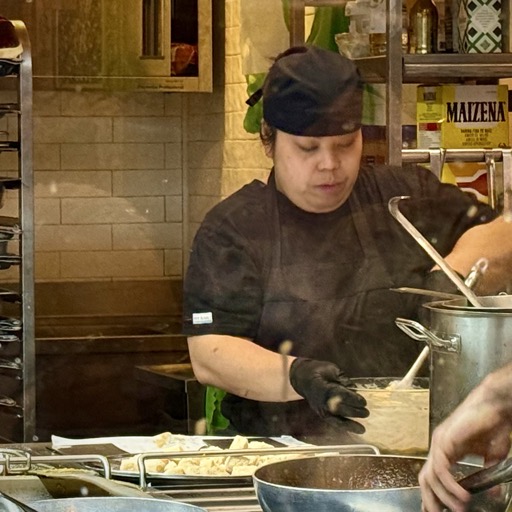
Making the pasta in front of us.

Casio de Pepe, the most ‘robust’ Rome pasta dishes.

It was!

All this was paired with three different wines from the area.

Time for gelato for dessert.

The dome of St. Peter’s Basilica watching us while we stumble back to the hotel.

Crossing he Tiber river at night

Glad-I-Ate-Here Read More »

The Stones on Tour

Our day started with a tour of the Colosseum that included access to the ‘underground’ areas that was originally under the arena floor.

It was fascinating and interesting and you could feel the history seeping out of the stones.

The tour ended across the way in the Roman Forum. From on top of the Palentine Hill, looking down, you could really appreciate the archeological lasagna that is Rome.

The bakery in front of our balcony window starts very early with the most wonderful smells drafting up.

No cat calls!

Welcome to the Vittoriano, also known as the Altar of the Fatherland. The Monument to king Victor Emmanuel II was built starting in 1885, designed by Giuseppe Sacconi, and inaugurated in 1911 to commemorate the 50th anniversary of the Unification of Italy.

The monument was used for presenting animal hunts, gladiatorial fights and death sentences. It was built in the place of the artificial lake of Nero’s Domus Aurea by the three emperors of the Flavian dynasty: Vespasian, Titus and Domitian. Construction began in 71 AD and was financed with the spoils from the Jewish War of 70. The building was solemnly inaugurated in 80 by Titus, completed by Domitian and restored several times until the 5th century. Known originally as Amphitheatrum magnum or Caesareum, in the Early Middle Ages it was given the name of Colysaeum, probably because it was close to the statue of the Colossus erected by Nero.

The main hallway the gladiators used to get from their ‘school’ to underneath the arena floor. We are on the way to see a recreation of one of the elevators that was used to get everything to the arena floor.

Mosaic with hunting scene (venatio) and inscription ex vicen(alibus) f(e) (iciter) vell, refers to the celebration of the 20″ year of reign of Emperor Antoninus Pius (158 AD). The symbol of defeat, the THETA NIGRUM, refers to the death of the animal; the V, read as vicit, to the victorious hunter; VELI, which is difficult to complete, is perhaps an abbreviation of the name of the hunter.

During the long days dedicated to spectacles in the amphitheatres, not only gladiator fights took place: hurting scenes or venationes were also popular.

This is the case of the mosaic on display. It depicts two figures with long hair and short robes facing a wild animal: for a long time it was debated whether they were women or men. The current interpretation prefers to identify them as men.

The presence of women in the arenas, as gladiators or hunters, is however testified by literary sources and archaeological documentation.

Often the emperors themselves organised shows with women: because of their rarity, it made the performances more interesting.

From Rome, Castra Praetoria – 2nd century AD

Seat from the Colosseum bleachers (cavea) bearing graffiti depicting a fight between a Retiarius and a Secutor.

Underneath the arena floor it was dark, cramped, and smelly from all the people and animals.

One of the Colosseum Cats.

The Roman Forum, or what is left of it.

The Stones on Tour Read More »

Eeuw, David!

We left Venice very early to make sure we do not miss our train again.

Florence was an intense delight. We saw David, the only stop we planned, and ended up adding on Ponte Vechhio as well as, of course, a Wine Window!

Good bye, Venezia!

Having Prosecco while waiting for our timed tickets.

“Nor has there ever been seen a pose so fluent, or a gracefulness equal to this, or feet, hands and head so well related to each other with quality, skill and design”. With these words Giorgio Vasari attempts to define the reasons behind the marvel that the vision of David provokes in the observer. He continues by stating that the statue so far surpasses both in beauty and technique ancient and modern statuary that one needn’t bother seeing other works in sculpture.

At the end of 1501, Michelangelo obtained the permission of the Opera del Duomo to work a block of marble which had been abandoned in the courtyard of the Cathedral of Florence for the creation of the figure of the young hero, subsequently placed in front of Palazzo Vecchio in Piazza Signoria.

It has always been a subject of debate among scholars whether David is represented before or after his victory over Goliath. His sling is also barely visible as though to emphasize how David owed his victory not to brutal force, but to his intellect and to his innocence. As soon as it was placed in front of Palazzo Vecchio, the statue became a symbol of liberty and of civic pride for the Florentine Republic. Surrounded by hostile enemies, the city identified itself with the young hero who, with the help of God, had defeated a much more powerful foe.

In 1873, Michelangelo’s statue was brought here to the Tribune of the Galleria, built expressly for it and, only in 1908, was it substituted in Piazza Signoria by the marble copy still there today. The bronze copy found in Piazzale Michelangelo overlooking Florence was done in 1866.

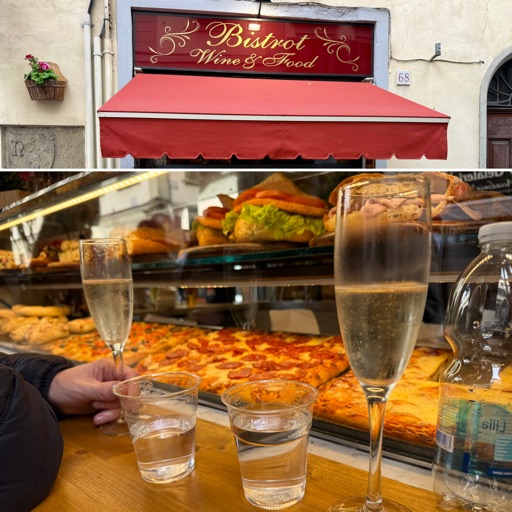
Our first pizza in Italy ever!

Found a Wine Window!

Onwards to Roma!

PS Another title reference!

Eeuw, David! Read More »

Ciao, Venezia!


Our last evening in Venice.

We took a relaxed walk back and believe it or not, still went for a three course dinner.

Until next time!

Toy maker at work.

The market was already closed for the day.


How much Prosecco did she drink to end up in a bowl of salt?
Mysteries abound…

The place we picked for dinner. Now how do we get over there…?

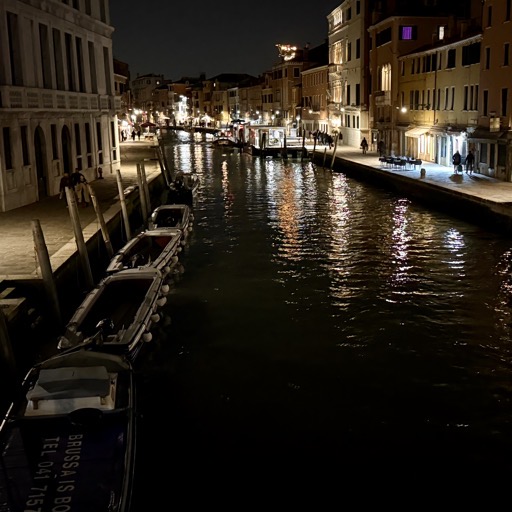
Goodnight, Venice!

Ciao, Venezia! Read More »

A Floating We Will Go

Yes, we had to.

We are in Venice after all!

The gondolier was remarkably well informed and told as all kinds of great historic stories of the places we floated by.

And the gondoliers are so skilled in maneuvering those long skinny craft in those narrow canals.

A Floating We Will Go Read More »

Scroll to Top